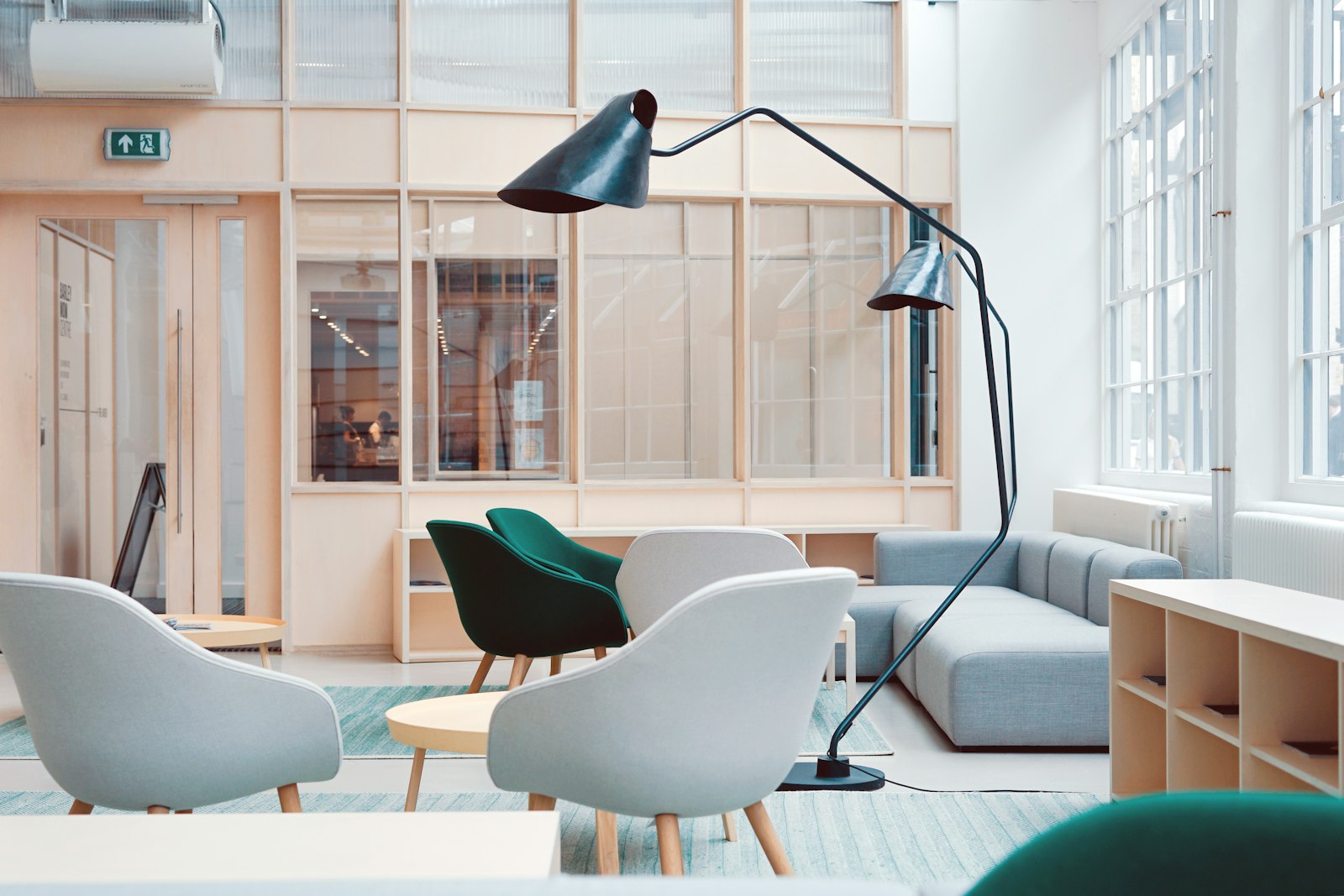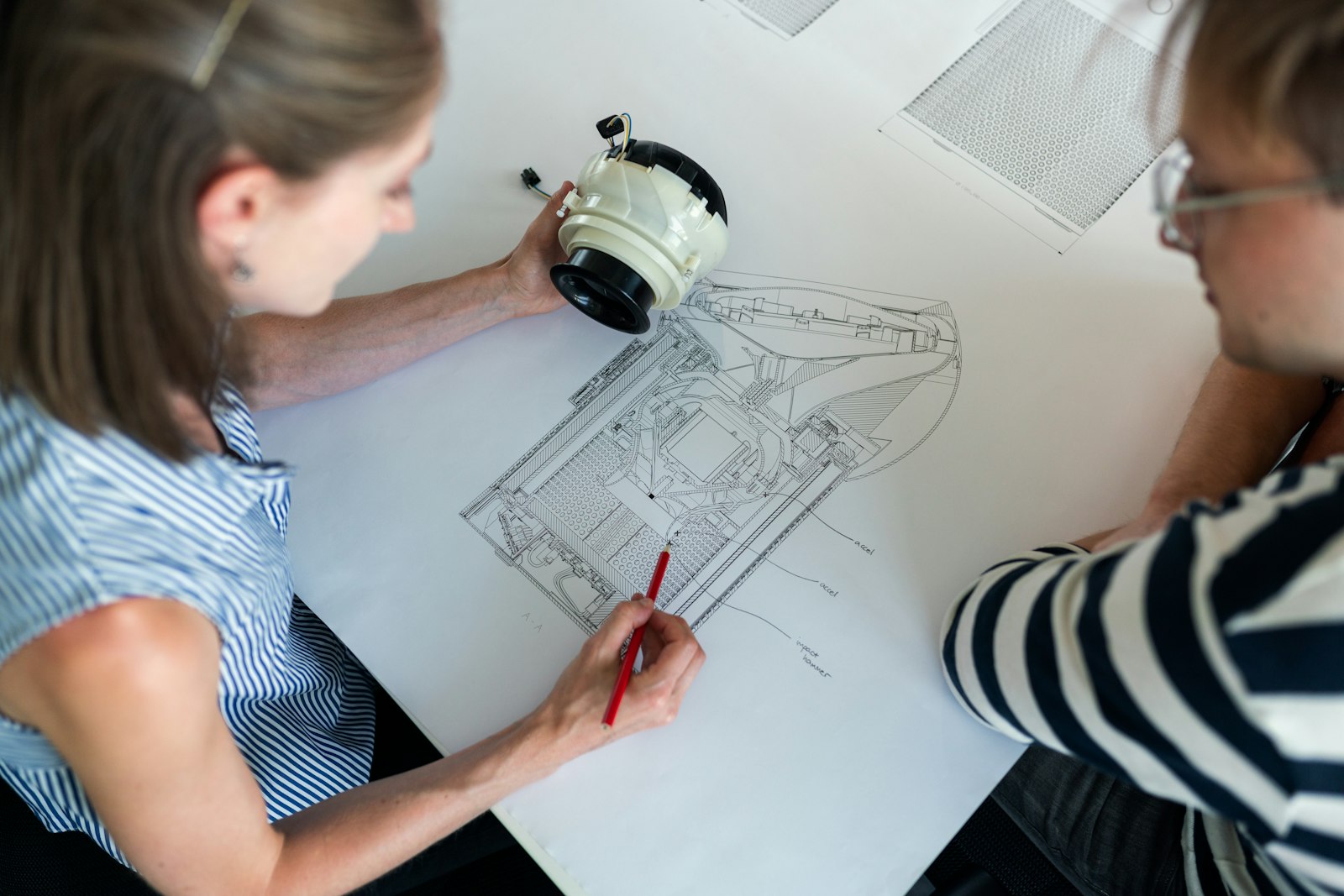
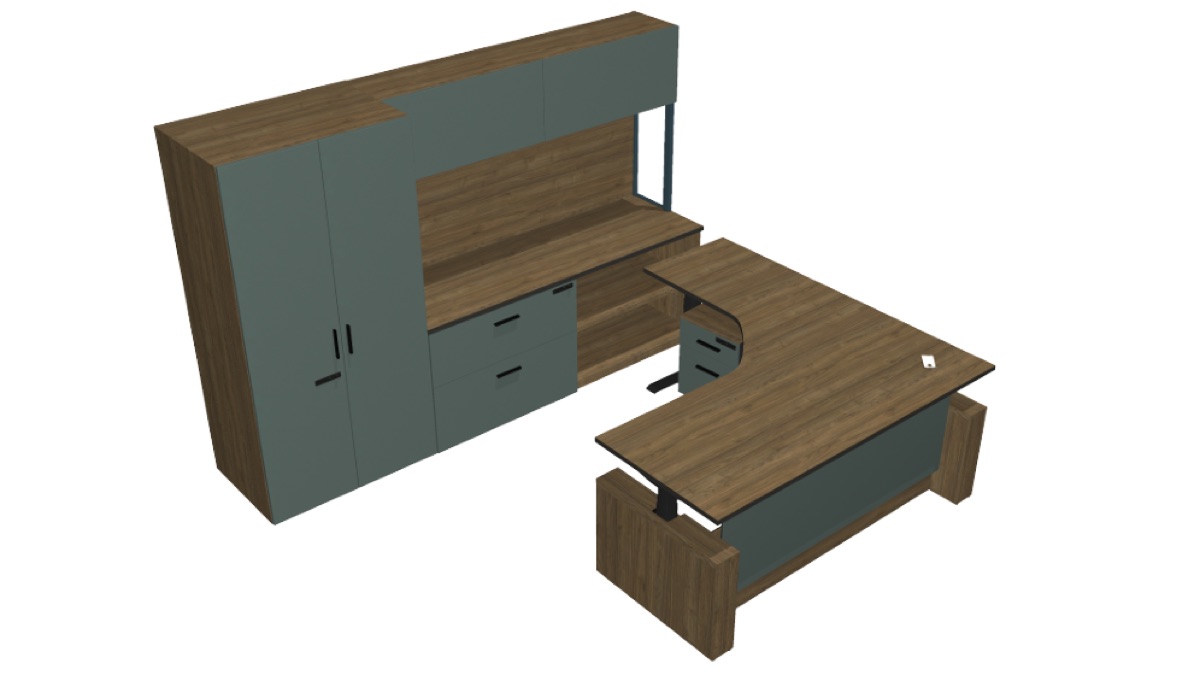
A furniture mock-up is a sample station set up for testing before the full order is placed: one workstation, one chair or one finish, put in front of the people who will use it. A pilot goes a step further and puts a few pieces into real daily work for a week or two. Both answer questions a spec sheet cannot, such as whether a chair fits your shortest and tallest staff, whether the cables keep up with a desk that moves, and how a fabric looks in your own light.
Most of that testing is cheap. A 3D render of every room comes with our free space plan. Loaner chairs can sit on your floor for a week. And as our accessible workstation guide puts it, ten minutes sitting at a station in our Hooksett showroom tells you more than an hour of specification review. A built workstation mock-up or a small pilot order costs more, so save it for the stations where a mistake would be expensive.
This guide is for facilities, workplace and project teams with a large order ahead and a committee to convince. It covers when a mock-up or a pilot is the right test, what testing costs next to the mistakes it catches, what to test, how to collect feedback that holds up, and how the results should change the final spec.
Mock-up or pilot: which one answers your question?
Use a mock-up when the question is about fit, function or cleaning, and a pilot when it is about preference or daily use. A mock-up settles what you can check in one sitting: whether the knee space clears, whether the monitor arm holds two screens, whether the cleaning crew can reach under the base. A pilot settles what takes time and more than one person, such as which chair people still like after a week, or which task light is still switched on when the pilot ends.
Our guide to task lighting shows why some questions need a pilot. Preference for a desk light is genuinely individual, and the fixture that wins is rarely the one that looked best in a catalog. One sample on a table cannot tell you which fixture that will be. Two weeks of real use can.
A rough way to choose:
- ›A 3D render first, for anything about size and position. Table length, aisle widths, panel heights and spacing all read more honestly in 3D than on a flat plan, as our free space plan guide explains.
- ›A mock-up for anything you can check in one sitting: clearance and reach, monitor and cable loads, cleaning access, and finishes against the room.
- ›A pilot for anything that depends on taste or habit: seating comfort, task lighting, and how a shared desk works when a different person sets it up each day.
Some projects need both. Our healthcare furniture page pairs mock-ups with field evaluation whenever the application warrants it. An office furniture pilot program that follows a mock-up works the same way: the mock-up proves the station works, and the pilot shows whether people use it the way you expect.
What a furniture mock-up costs and how long it takes
The early tests cost little and take days rather than months. The 3D render in our free space plan costs you nothing. Manufacturers and dealers will send loaner chairs for a week on your floor. A furniture showroom evaluation in Hooksett lets your team sit in the chairs, run the desks at sitting and standing height and compare finishes side by side. A built mock-up or a small pilot order is a real cost, so put it where a mistake would cost more.
That is the useful comparison: the cost of the test against the cost of the mistake. Our free space plan guide prices the problems that turn up on install day instead of on the plan:
- ›The wrong conference table: $3,000 to $8,000 in restocking and reordering, plus 6 to 10 weeks of waiting.
- ›A reception desk with the wrong sight line: $5,000 to $15,000 to rework or replace.
- ›Too few phone booths: $4,000 to $12,000 for each one added later, plus a delay to the install.
- ›An accessibility failure: $10,000 to $40,000, plus the effect on the schedule.
A render or a showroom visit catches most of those before anything is ordered. Spend on a physical mock-up or a pilot where the risk sits in the product itself: the chair two hundred people will sit in, the desk that has to carry two monitors and still move, or the fabric that has to survive your cleaning products.
Then plan the time into the schedule. Samples need about a week on the floor, and a task light pilot needs two. A custom laminate or a customer-supplied fabric adds 2 to 6 weeks to the lead time, according to our 2026 lead time data, so any finish you want to test has to be settled early. Our interior design guide asks whether approval and sample dates are connected to the occupancy plan. Ask the same question of every mock-up.
If the pilot needs its own small order, ask what ships fastest. The same lead time data treats any quote under six weeks as a quick-ship promise, and Global Furniture’s quick-ship program lands in about two weeks on a smaller catalog.
What to test: monitors, acoustics, cable management, chair fit
What you test decides how long the test takes, so test what a spec sheet cannot settle. Our fit-out responsibility matrix lists the interfaces the furniture scope owns, and they make a good starting list: whether the workstation supports the monitor count, size and weight, and whether the sit-to-stand travel works with the cable management.
- ›Monitors. Put the screens your staff actually use on the arm and move it through its full range. Then load the desk the way a working day does: two monitors, a laptop, a dock and someone leaning on the edge. That is the load our height-adjustable desk rollout guide says to rate for.
- ›Cable management. Run each desk from its lowest setting to its highest with everything plugged in. Desks that move up and down pull cords loose unless the cable path moves with the top, which is why the same guide puts a cable tray, a spine or a basket on every base. Our power and data guide treats monitor arms, docking stations and cable management as one decision, and a mock-up is where you see why.
- ›Chair fit. Test with your shortest and tallest people, not only the person running the test. Check the seat depth, the arm height and width, whether the cylinder reaches both ends of your staff, and the published weight capacity, the checks our accessibility guide lists.
- ›Reach and clearance. Sit at the station and reach for the power outlet. Look for anything under the desk, such as a modesty panel, a cross brace or a pedestal, that takes the knee space the drawing promised.
- ›Finishes and cleaning. Judge each sample in the light of the room it is going into, next to the finishes it will sit beside. Then try your own cleaning product on it, as our fabric selection guide recommends.
- ›Acoustics. One station tells you little about how a floor will sound. In most offices the ceiling has the biggest effect, because it is the largest uninterrupted surface in the room, as our guide to office acoustics explains. What a mock-up can show is whether a screen or panel stands high enough to block the line of sight between seated neighbors.
How do you collect feedback that holds up in a steering committee?
Collect it from the people who will use, clean and look after the furniture, compare two or three real options, and record what people did as well as what they said. Feedback gathered that way reads as evidence rather than taste.
- Include everyone who will live with it. Our healthcare work builds mock-ups with the people who use, clean and maintain the product, and our airport furniture guide has facilities staff review a mock-up for leg count, floor clearance, seams and whether the upholstery comes off. In an office, that means the staff who sit there, the cleaning crew, and whoever handles moves and repairs.
- Compare two or three options, not one. Our task chair buyer’s guide puts two or three chairs in real seats for a week, and the task lighting guide pilots two or three fixtures. With only one option, people have nothing to compare it with.
- Let several different people try each option. That matters most on a shared floor, where several people use each chair every week, as our hot-desking guide points out.
- Record behavior as well as opinion. The task lighting guide’s test is simple: at the end of the pilot, see which lights are still switched on. Look for the same kind of evidence in every pilot.
- Write the result down, one station per page. For each healthcare model we document the configuration, the test evidence, the capacity and dimensions, the approved fabric and cleaner guidance, the warranty, the lead time, and the mock-up with its stakeholder approval. A short record like that, with who tested the station and what changed, gives a committee something to approve rather than a set of opinions.
How pilot results change the final specification
A good test leaves you with a spec that is narrower and more exact than the one you started with.
- ›Fewer models. The task lighting guide ends its pilot by standardizing on one or two models. Our furniture standards guide sets two tiers for each function, a standard and a step up, because one option produces workarounds and three produce decision fatigue.
- ›Exact options instead of product families. The arm, the base, the cable tray and the seat options the test settled belong in the spec by name. The standards guide lists what that document holds: the product, manufacturer, model, finish codes, approved options, price, lead time and who to order from, plus what is not approved and why.
- ›Warranty terms checked on the parts that wear. A 12-year frame warranty means little if the gas cylinder and casters carry two years, as the task chair guide warns.
- ›The approved sample as the install reference. At closeout, finishes and fabrics are checked against the approved samples in the actual light of the space, because dye lots and laminate batches vary. Our punch list guide covers that walk.
- ›A phased order, if it suits the project. Splitting the work can let you test a standard before rolling it out, as our furniture financing options note. The pilot furniture can then become the first phase of the order rather than a separate purchase.
Bring the stations that worry you most to our Hooksett showroom, and we will arrange loaners or a mock-up where a station needs more than a visit. Our contact center guide makes the same offer for a floor of two hundred seats: sit in the seating before you commit to two hundred of anything. Our furniture specification service covers how the tested choices become the final spec.